

Accessible and Inclusive Corporate Events: Planning Guide
Accessible and inclusive corporate events are no longer a nice-to-have. They are essential for creating professional, welcoming experiences where every attendee can take part with confidence. From physical accessibility and inclusive catering to neurodiversity, presentation design and hybrid access, knowing how to plan accessible and inclusive corporate events helps remove barriers before they become problems.
As leading corporate event planners in the UK, we know that a successful event is about more than delivering an informative programme. Décor, styling and brand consistency matter, but the best events are those where people feel welcomed, respected and able to participate fully, whatever their age, abilities, background or individual needs.
In this guide, we explore how to plan accessible and inclusive corporate events that support a better experience for everyone.
Start with an accessible and inclusive corporate events planning mindset
Inclusive event planning should begin before you choose a venue, theme or programme. Firstly, in knowing how to plan accessible and inclusive corporate events, consider the diverse needs of your audience, including physical accessibility, hearing and visual impairments, dietary requirements, neurodiversity, religious and cultural considerations, and family or caring responsibilities.
A simple way to do this is to ask attendees what they need during registration. Give guests the opportunity to request wheelchair access, captioning, translation services, quiet spaces, dietary accommodations, prayer rooms, reserved seating or additional support around the venue.
Gathering this information in advance allows you to plan properly, reduce barriers and create a more accessible and inclusive corporate event for everyone attending.
Choose an accessible corporate event venue
Firstly, your venue plays a pivotal role in creating an inclusive event. Look for step-free access, ramps where needed, accessible toilets, lifts to all event spaces, wide doorways, spacious layouts and reserved accessible parking.
Physical access is only one part of the picture. Consider whether the venue has quiet areas, whether it is accessible by rail as well as car, and whether guests using accessible routes can move easily between event spaces without feeling excluded or delayed.
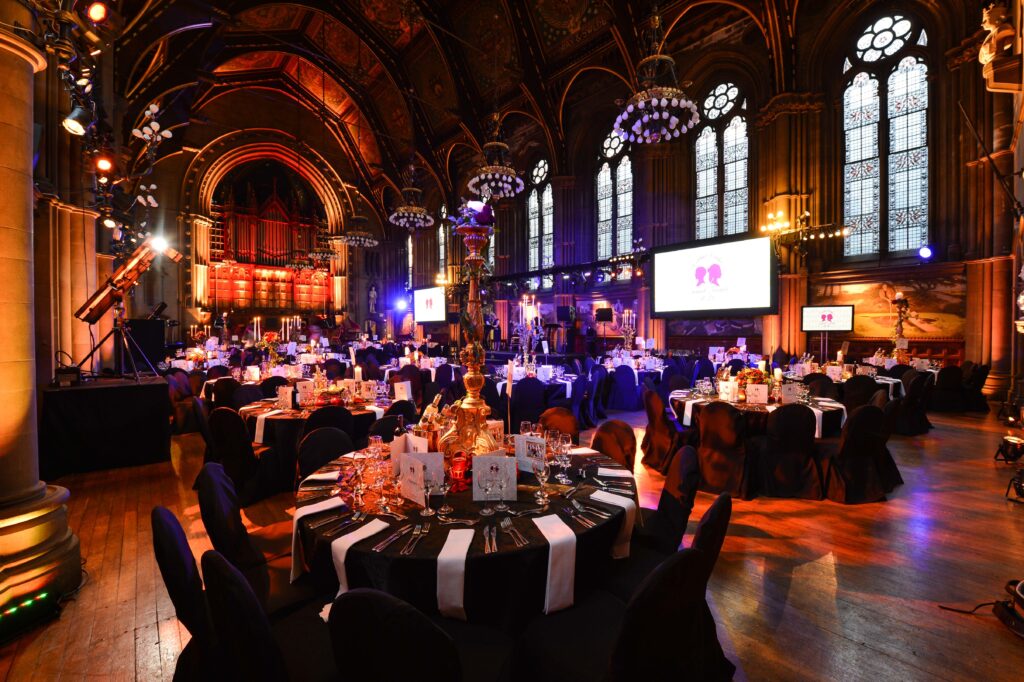
A sweeping country estate may offer atmosphere and character, but older buildings do not always have the facilities needed for accessible events. It is worth comparing heritage venues with modern, purpose-built spaces designed with accessibility in mind.
If your event includes overnight accommodation, check that the hotel or accommodation is accessible too. Adapted rooms, accessible bathrooms, step-free routes and supportive staff can help guests feel included from the moment they arrive. An increasing number of hotels are now offering autism friendly guest rooms and services, too.
Support neurodiverse attendees at corporate events
There’s an estimated 15% to 20% of the population that is neurodivergent. A report by JPMorgan Chase found that professionals in its Autism at Work initiative made fewer errors and were 90% to 140% more productive than neurotypical employees. Which is exactly why the number of nuerodivergent employees is up, and consequently, nuerodivergent attendees at corporate events are on the rise.
Neurodiverse attendees, including people with autism or ADHD, may experience sensory overload in busy event environments. Small adjustments can make a significant difference to comfort, confidence and participation.
Consider offering quiet rooms, low-stimulation spaces, outdoor break-out areas, comfortable seating areas and regular breaks between sessions. Publish schedules in advance, avoid unnecessary last-minute changes, and provide sensory warnings for loud music, flashing lights or high-energy event elements.
You could also make noise-cancelling headphones available for attendees who are sensitive to sound. These simple measures help make accessible and inclusive corporate events more comfortable for a wider range of guests.

Make presentations and event content inclusive
Presentations, keynote sessions and panel discussions should be designed so that everyone can follow along easily.
Use large, easy-to-read fonts, strong colour contrast and clear slide layouts. Avoid light text on white backgrounds, limit visual clutter and use bullet points where possible to reduce cognitive overload.
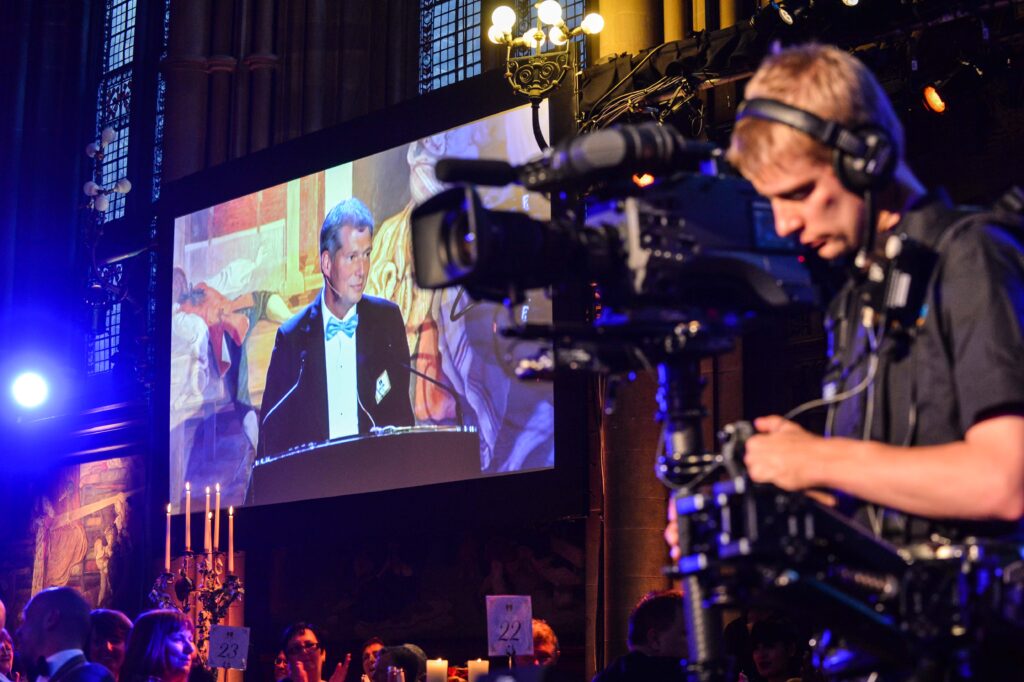
Provide captions for videos and ask speakers to describe charts, graphs and images rather than relying on visual content alone. Where requested, consider a visible British Sign Language interpreter.
Sharing materials in advance is also helpful for attendees who use screen readers or prefer to review information before the event. Alternative formats, such as large print, may also be useful for guests with visual impairments.
Provide inclusive catering options
When looking at how to plan accessible and inclusive corporate events, a conference audience needs feeding in style! Catering is a key part of any corporate event, and it is also an area where inclusion matters. Alongside vegetarian and vegan options, consider allergies, intolerances, gluten-free and dairy-free requirements, and foods that can trigger serious reactions, such as peanuts.


Religious dietary requirements should also be considered, including halal or kosher options where needed. Clearly label dishes and ingredients so guests can make informed choices. For drinks, put the same thought into alcohol-free options as you would into the alcoholic drinks menu. Mocktails and 0% drinks should never feel like an afterthought.

Think beyond physical accessibility
Accessible and inclusive corporate events are about more than ramps, lifts and accessible toilets. They are about creating an atmosphere where every attendee feels represented, respected and welcome.
Use inclusive language in invitations and event communications. Provide translated materials where appropriate. Feature diverse speakers and panel members, offer gender-neutral facilities where possible, and choose event imagery that reflects a wide range of people and experiences.

Small choices can have a lasting impact on how attendees feel during and after your event. When your speakers, panels and communications reflect your audience, your message is more likely to connect and leave a meaningful impression.
Remember hybrid and virtual access
Hybrid events are not right for every occasion, and at TLC, we much prefer the live event experience. But remote access can make corporate events more inclusive for people who cannot travel or prefer to participate online.
Virtual access can support attendees with mobility challenges, international guests, parents and carers, people with health considerations and employees balancing work and personal commitments. If accessibility is part of your planning, it is always worth considering whether a hybrid or virtual option could expand participation.
Why inclusive corporate events create better experiences
Accessibility and inclusion are about creating environments where every attendee feels valued, comfortable and able to participate fully. In turn, this promotes teamwork, productivity and communication.
The most memorable accessible and inclusive corporate events are not always the largest or most extravagant. They are the events where people feel considered from the first invitation to the final farewell.
Therefore, when you ask how to plan accessible and inclusive corporate events, the answer is a simple one. When accessibility is built into your event planning from the start, everyone benefits. That is why businesses are increasingly focused on delivering events that embrace all and work for all. It is what turns a well-organised corporate event into a truly successful one.
How to plan accessible and inclusive corporate events: checklist
- Ask attendees about access and inclusion needs during registration.
- Choose a venue with step-free access, accessible toilets, lifts and suitable parking.
- Provide quiet spaces and sensory information for neurodiverse attendees.
- Make presentations easy to read, hear and follow.
- Offer inclusive catering with clear food labelling.
- Use inclusive language, representative imagery and diverse speakers.
- Consider hybrid or virtual access, where it supports participation.
Need support to plan an accessible and inclusive corporate event?
Planning an accessible and inclusive corporate event takes care, attention and experience. If you would like support designing an event where every guest feels welcome, speak to our corporate event planning team.